Brian Barry-Murphy’s Cardiff City Tactical Analysis 25-26
In this article, the tactics of Cardiff City under Brian Barry-Murphy, who are currently the top of the league in the English third division are going to be analysed.
Brian Barry-Murphy was appointed as new manager of Cardiff City this season after managing Manchester City Elite Development Squad for three seasons and working under Ruud van Nistelrooy at Leicester City for a half season.
His career path is quite similar to Enzo Maresca, the current manager of Chelsea, as he also managed Manchester City U23 just before Barry-Murphy took over the job and Leicester as well.
Not only the career path, but also the style of play is similar to Maresca’s. Barry-Murphy prefers to play with the ball based on the philosophy of positional play, but also is willing to play directly in behind to create immediate threats against high pressing teams.
This article is written just before he faces Maresca in the quarter final of Carabao cup as the only non-Premier League side of this round in this competition this season and the recent five league matches were analysed tactically in detail.
In Possession
As it was just mentioned, Cardiff are extremely good at playing with the ball by keeping the balanced shape and patiently switching the ball to nullify the opposition pressure. In recent games, however, many opponents have pressed with man-to-man, so they had to be more flexible and dynamic to manipulate the opposition markers, and Barry-Murphy adapted his style to the opposition countermeasures.
Build up
Firstly, let’s take a look at their ideal pattern of play.
The illustration below shows Cardiff’s first goal against Huddersfield.
Against the opposition 4-4-2 pressing, the 22-year-old right centre back Will Fish received the ball on the outside of the opposition first line. Then, Fish found the gap between the opposition defensive midfielders who were drawn by Cardiff’s players in the midfield and played to Omari Kellyman, who were loaned from Chelsea, in between the lines.
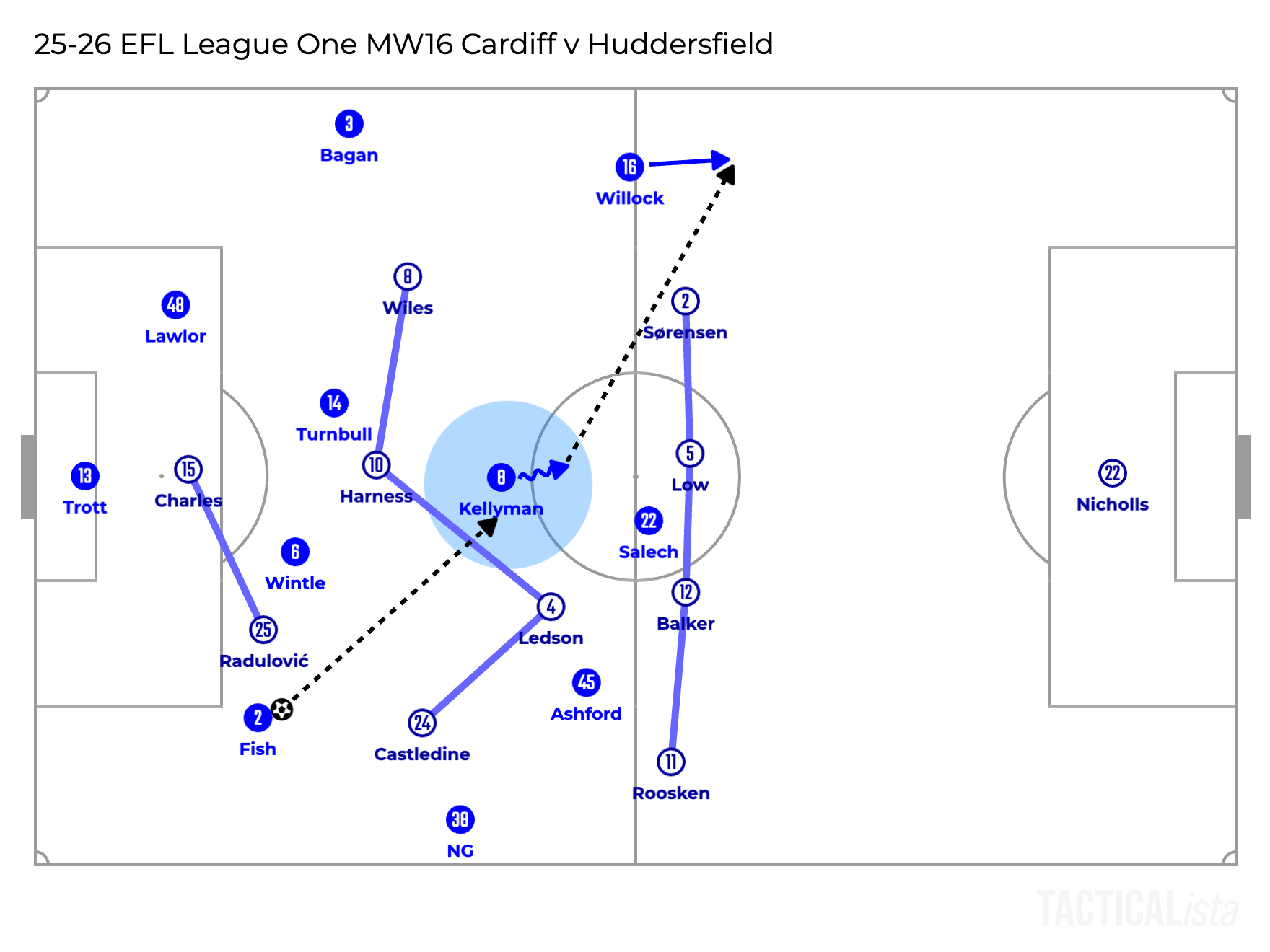
Kellyman turned forward and switched to the opposite winger Chris Willock and the left fullback Joel Bagan sprinted to join the attack to create the 2v1 against the opposition right fullback.
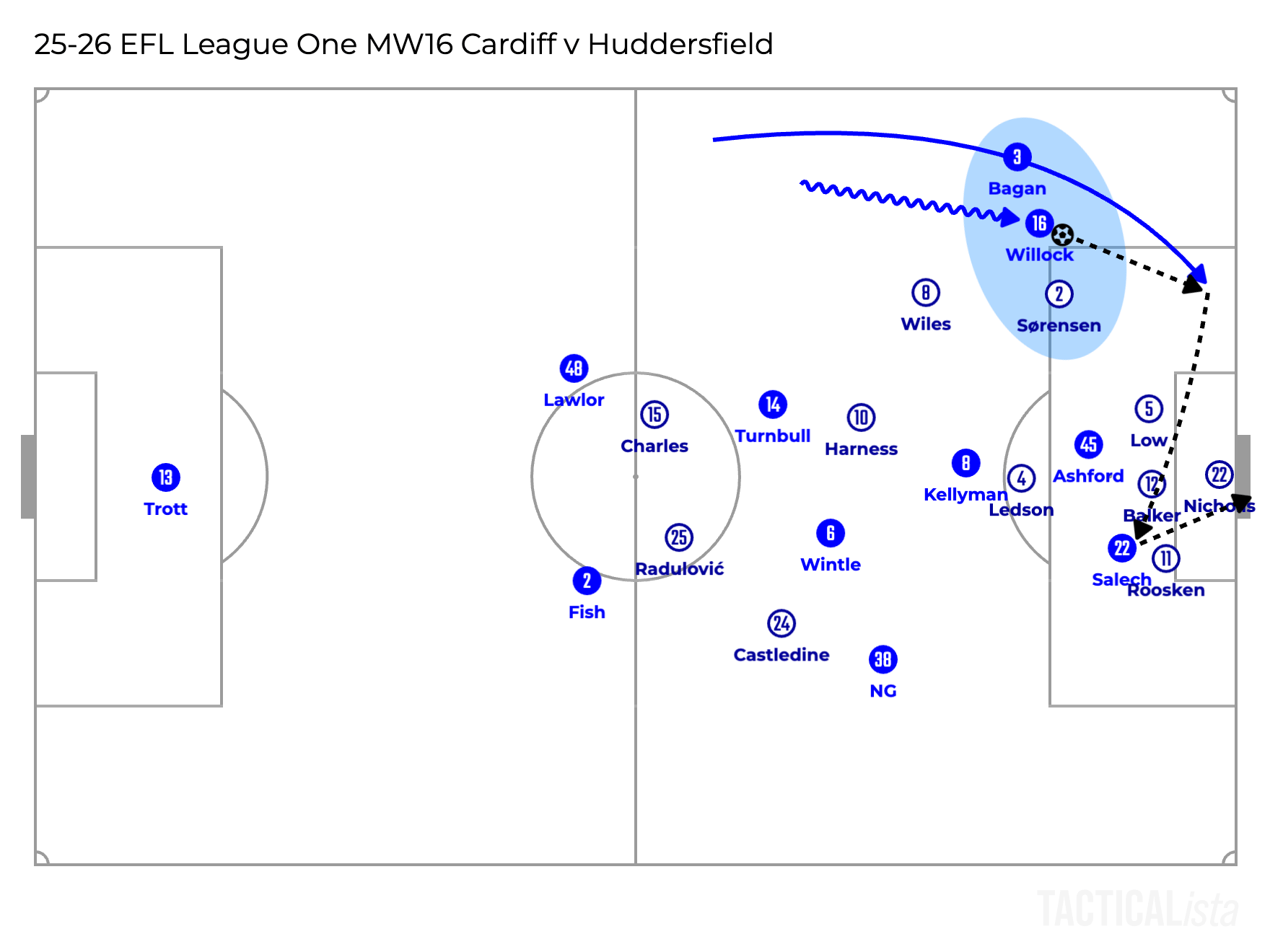
Willock took on the opposition right fullback and pin him and played through to Bagan who delivered the chipped cross to find Yousef Salech.
This sequence is exactly what they want to do against high pressing teams. However, it cannot be as easy as this, especially when the opposition teams pressed man-to-man, it became more difficult to find a spare player in the midfield.
Against this type of pressing, Barry-Murphy encourages them to be more flexible and leave their initial positions.
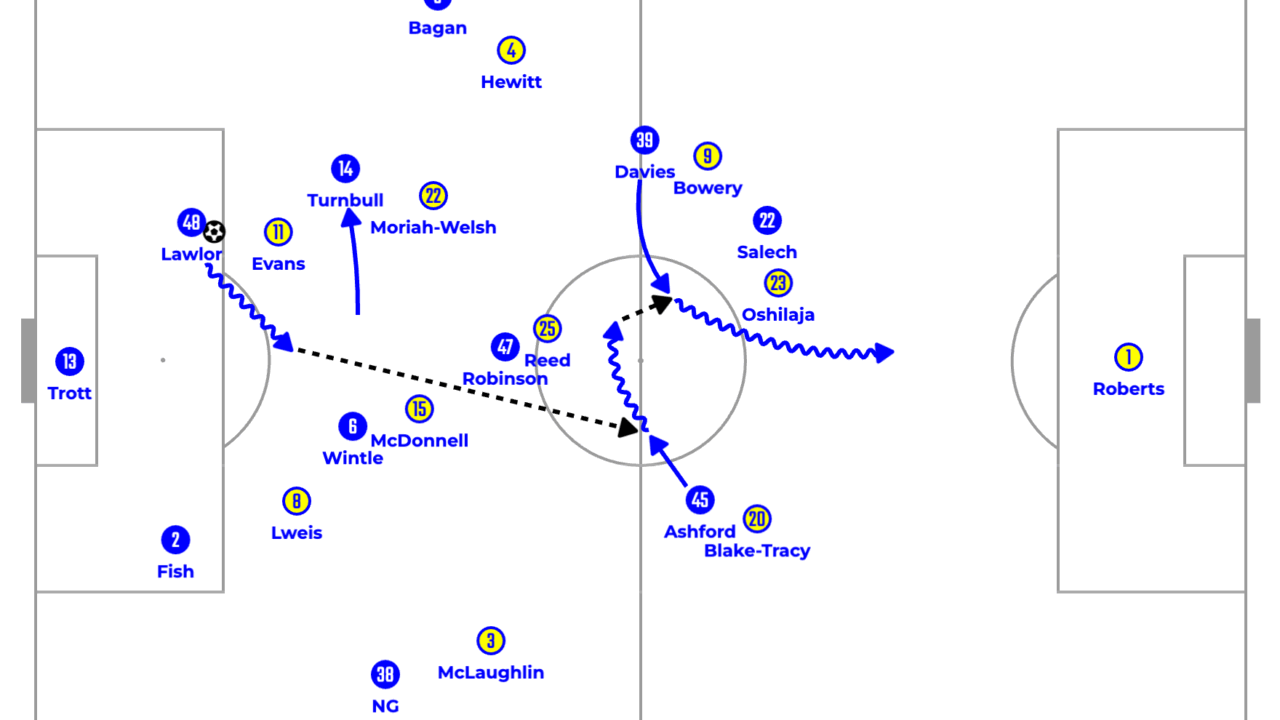
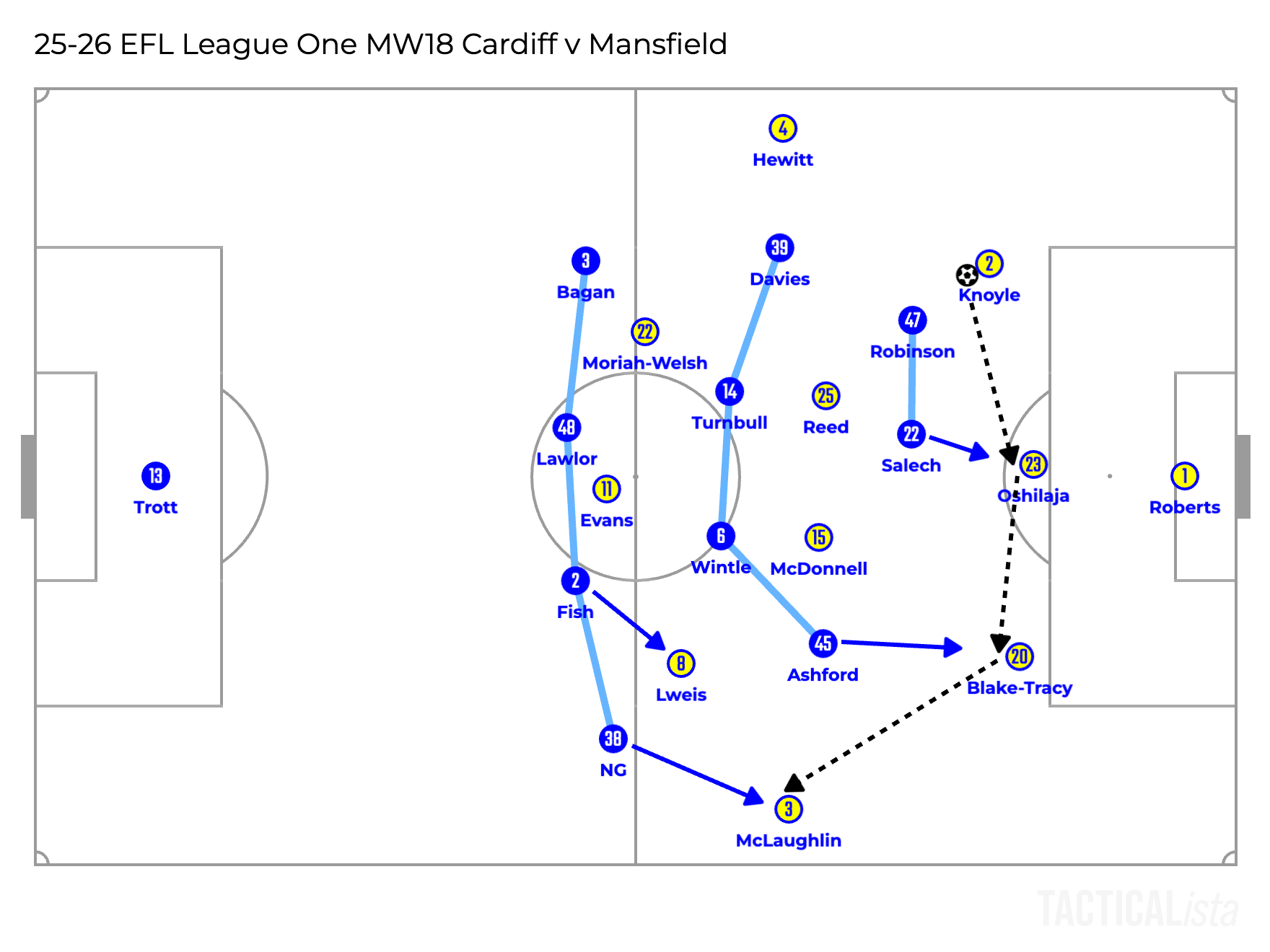
The example below illustrates how they have beaten Mansfield’s man-to-man pressing.
Dylan Lawlor, the 19-year-old centre back, bravely drove forward to create an angle and the wingers drifted inside to receive the ball away from pressure.
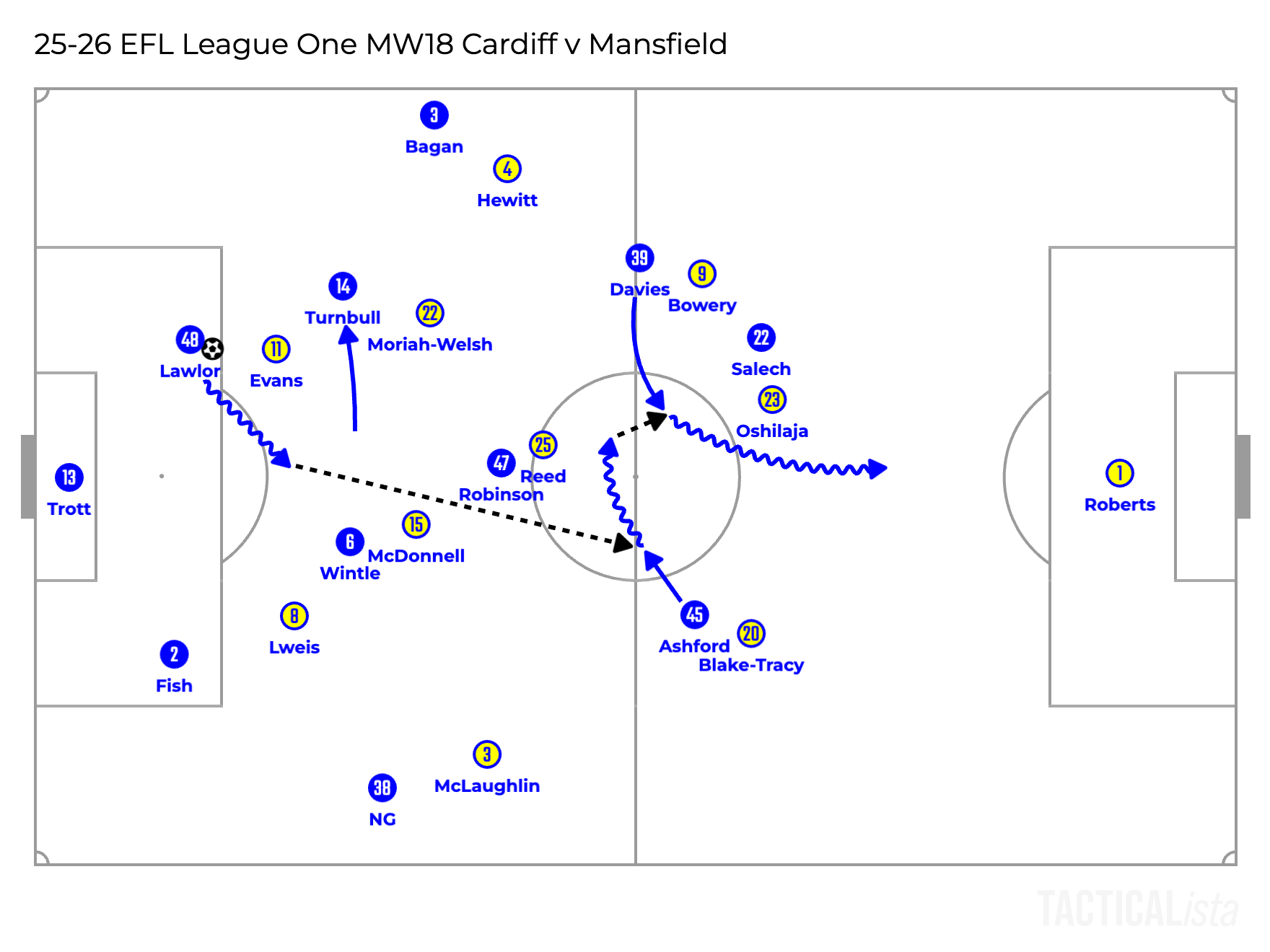
In this illustration above, the two academy graduates combined well around the centre circle to beat the opposition defenders. The right winger Cian Ashford received the split pass from Lawlor and linked up with the left winger Isaak Davies who carried the ball to the final third.
The ball-playing ability of Lawlor and Fish is incredible as they are comfortable on the ball like not only just passing it but also carrying it forward to create advantages up front. In addition to them, the goalkeeper Nathan Trott also contributes to their build-up play a lot. He is calm on the ball and can play split passes or find the fullbacks and create passing angles with his first touch.
Another thing to note here is their change to the double pivots.
They used to play with Ryan Wintle as a single pivot and the other defensive midfielder such as David Turnbull or Joel Colwill stepped up into the space in between the lines.
However, as the opposition teams came to press with man-to-man, only having a single pivot is not enough to ensure passing lanes to the middle. Moreover, one more defensive midfielder staying deeper against man-to-man pressing can open more space in between the lines to exploit like we have seen in the previous illustration.
Possession in the Middle
In the midfield, even though they prefer to possess the ball, they are willing to exploit the space in behind by long balls with accepting the risk of losing the ball.
In the illustration below, as soon as Wintle received the ball in the middle of the pitch, he played in behind and Salech chased it and the header from him just went wide, but they created immediate threat from the midfield.
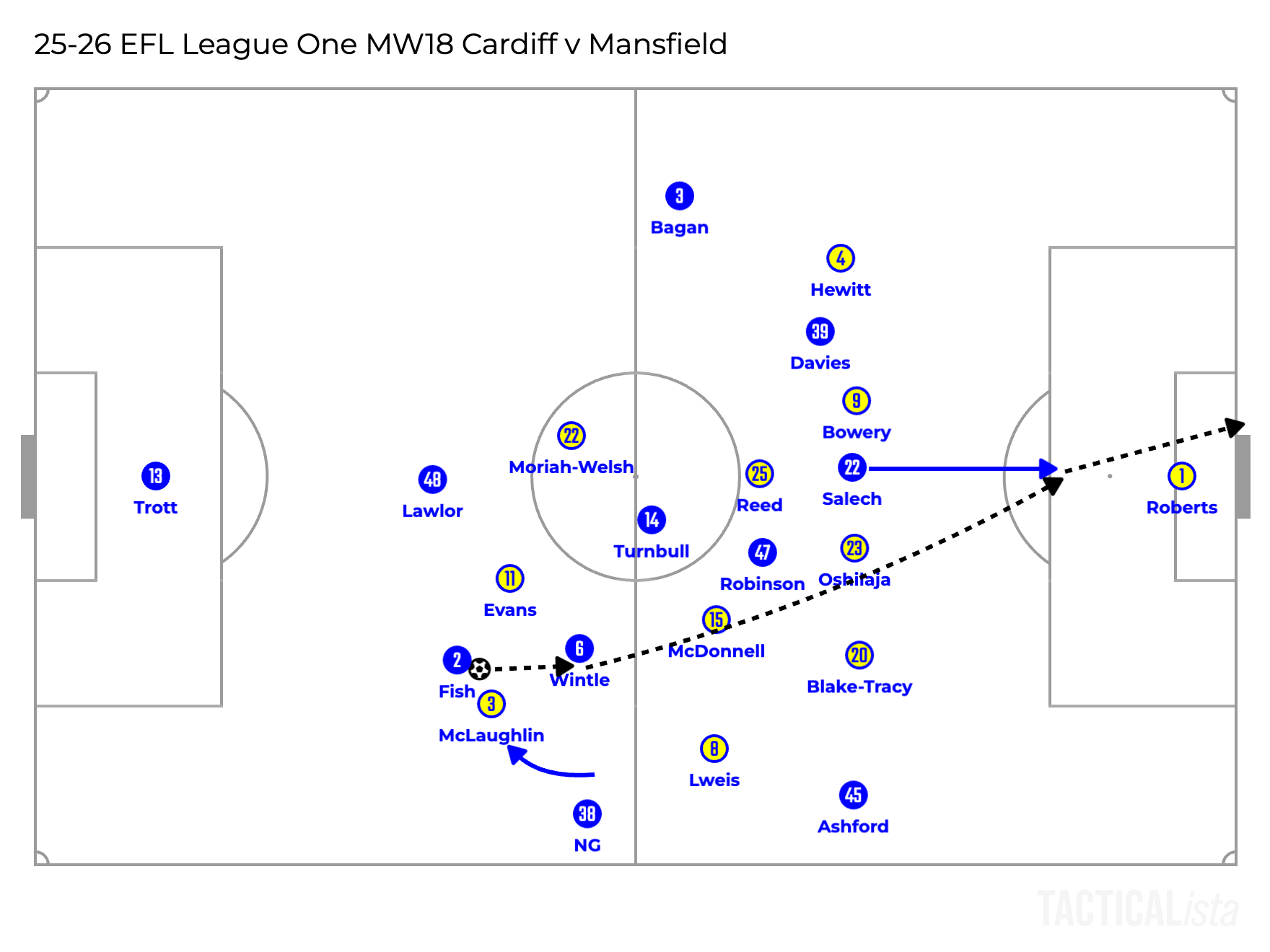
The possession-based teams often get stuck in the situation when they can possess the ball but struggle from breaking down the opposition defensive block with no space in behind or in between the lines.
Therefore, attempting to exploit the space in behind before it is closed can be more effective even though they might lose the ball more often. In that case, they just defend and try to win it back and play it in behind again. If they stick to the possession, they will be able to keep the ball but might end up without any chances.
Their idea of playing directly in behind can also be effective against the man-oriented defensive approach. Not only pressing high but also in the midfield, some opponents tried to defend with a more man-oriented style to apply pressure on the men rather than screening the passing lanes. Against them, it is essential to have options to play in behind as if they only play to feet, the opponents can apply direct pressure on the ball from their back.

In the illustration above, by Ashford dropping back and dragging the opposition left centre back out, the right fullback Perry Ng could exploit the space vacated by them.
And this pattern of play generated the goal against Mansfield.
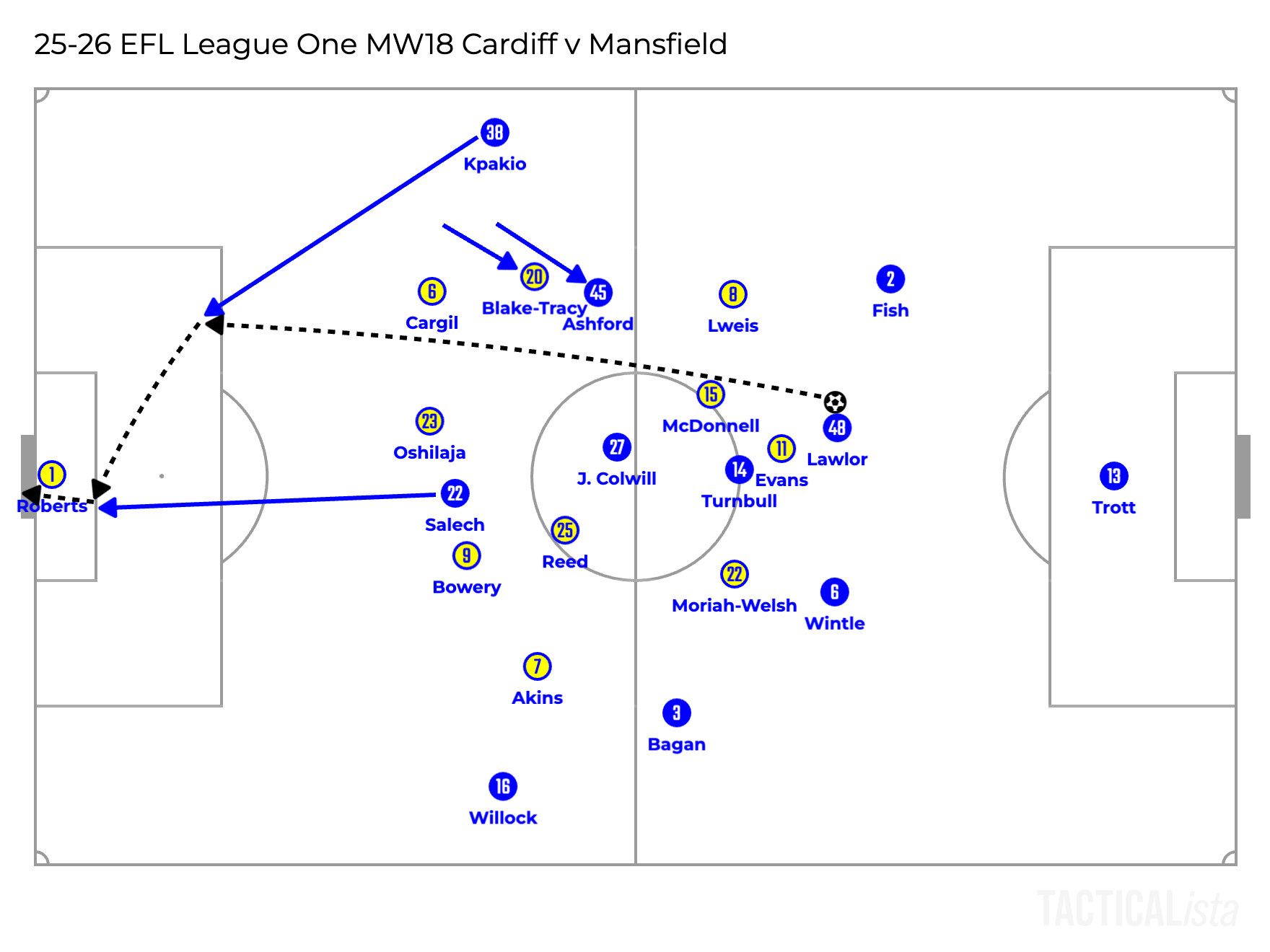
Similarly, Ashford dropped back and Ronan Kpakio, the 18-year-old another academy graduate, made a run in behind to give an assist to Salech.
Final Third Attacking
In the final third, there are two main characteristics to create goal scoring opportunities. The first one is making runs into the box with combinations in wide areas and the other one is finding Salech.
The illustration below shows how they combined on the left flank and penetrated into the box against Stevenage.
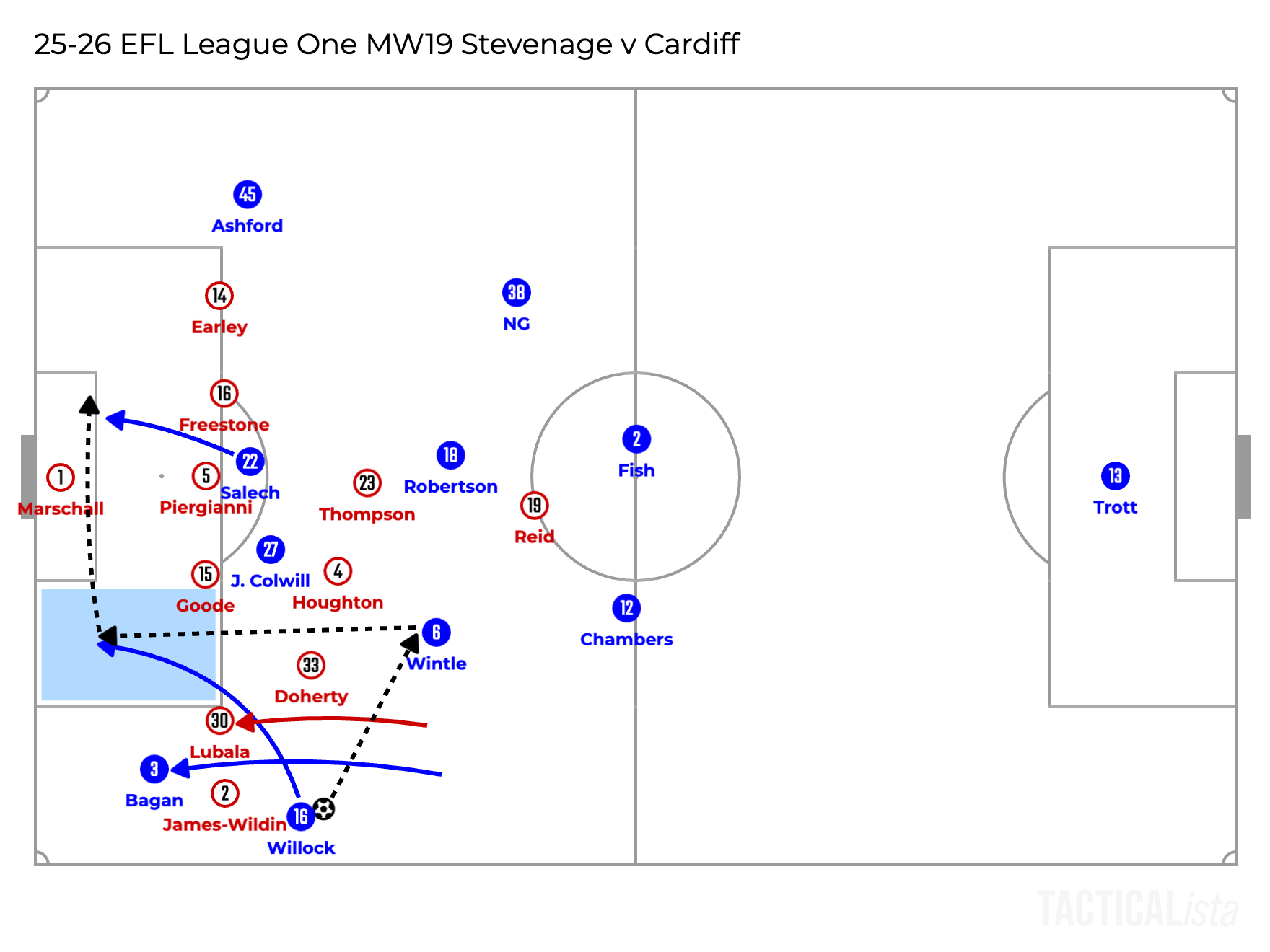
Bagan made an underlapping run after playing to Willock, which drew the marker to create the passing lane to Wintle. Then, Willock played the one-two with Wintle and made the curved run into the box to receive the through ball from Wintle. After that, he clipped it to target Salech but unfortunately it didn’t meet him.
This seems to be a principle-based pattern because it is possible to see the fullbacks making runs in behind or the wingers diving into the box frequently. The example below is also based on the same principle, but different movements.
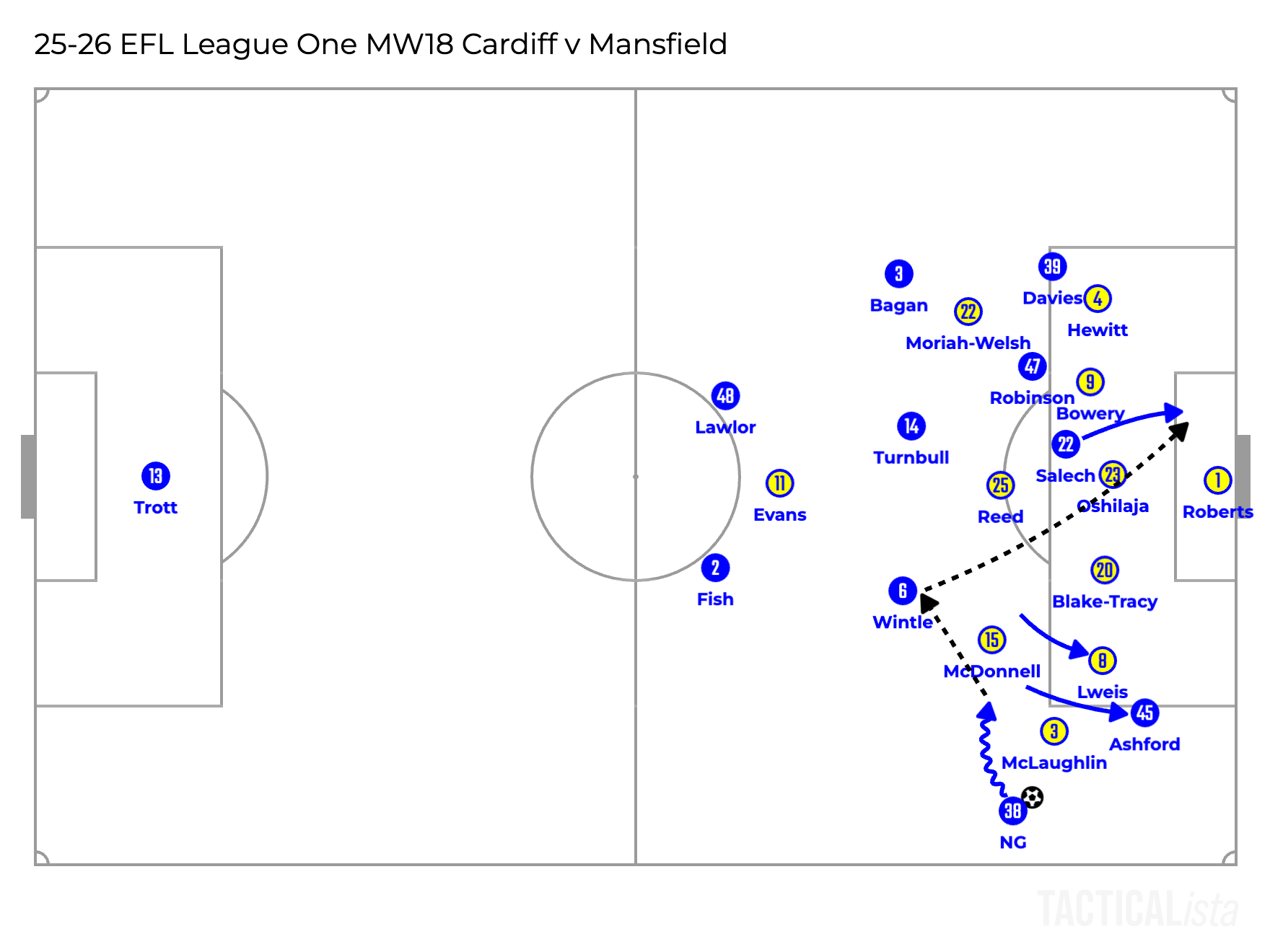
This time, it was the right winger Ashford who made the run through the channel and the right fullback NG was on the ball on the flank. Then, he cut inside and passed the ball to Wintle who delivered the cross to Salech.
As you notice, the last passes have been targeted at Salech again and again. The final pattern to discuss is the goal scored by him with the mix of tactical principles we have analysed so far.
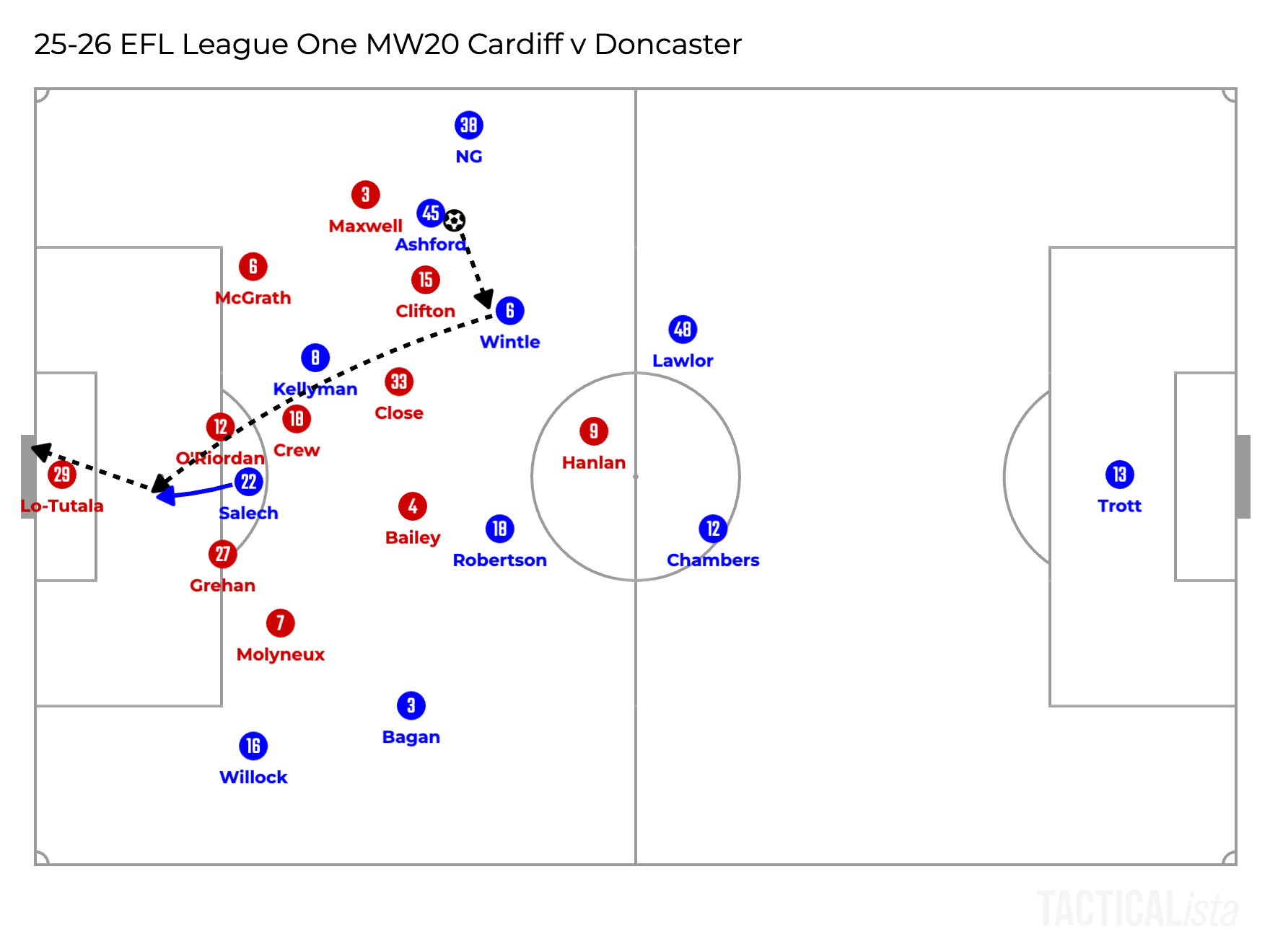
Wintle received the ball from Ashford and played in behind, and Salech beat his marker and scored against Doncaster. This goal can tell us about their principles such as combinations from wide areas, willingness to play in behind or finding Salech.
Salech, the top scorer in the league so far, is Haaland for Cardiff, who can add the most important thing for the teams with the possession-based style.
Out of Possession
Out of possession, they often set the 4-4-2 shape by the attacking midfielder stepping up to the first line. They tend to keep their positional structure rather than pressing with man-to-man, so the opponents often possess the ball in their defensive third with the numerical advantage.
Their aim is to force the opposition to play outside and lock them in by applying tight pressure on the opposition players around the ball.
In this example above, it is illustrated that they forced them to play to their right side and they shuffled across to the ball side to get close to the opponents.
However, this approach has been often beaten by teams with the back three shape.
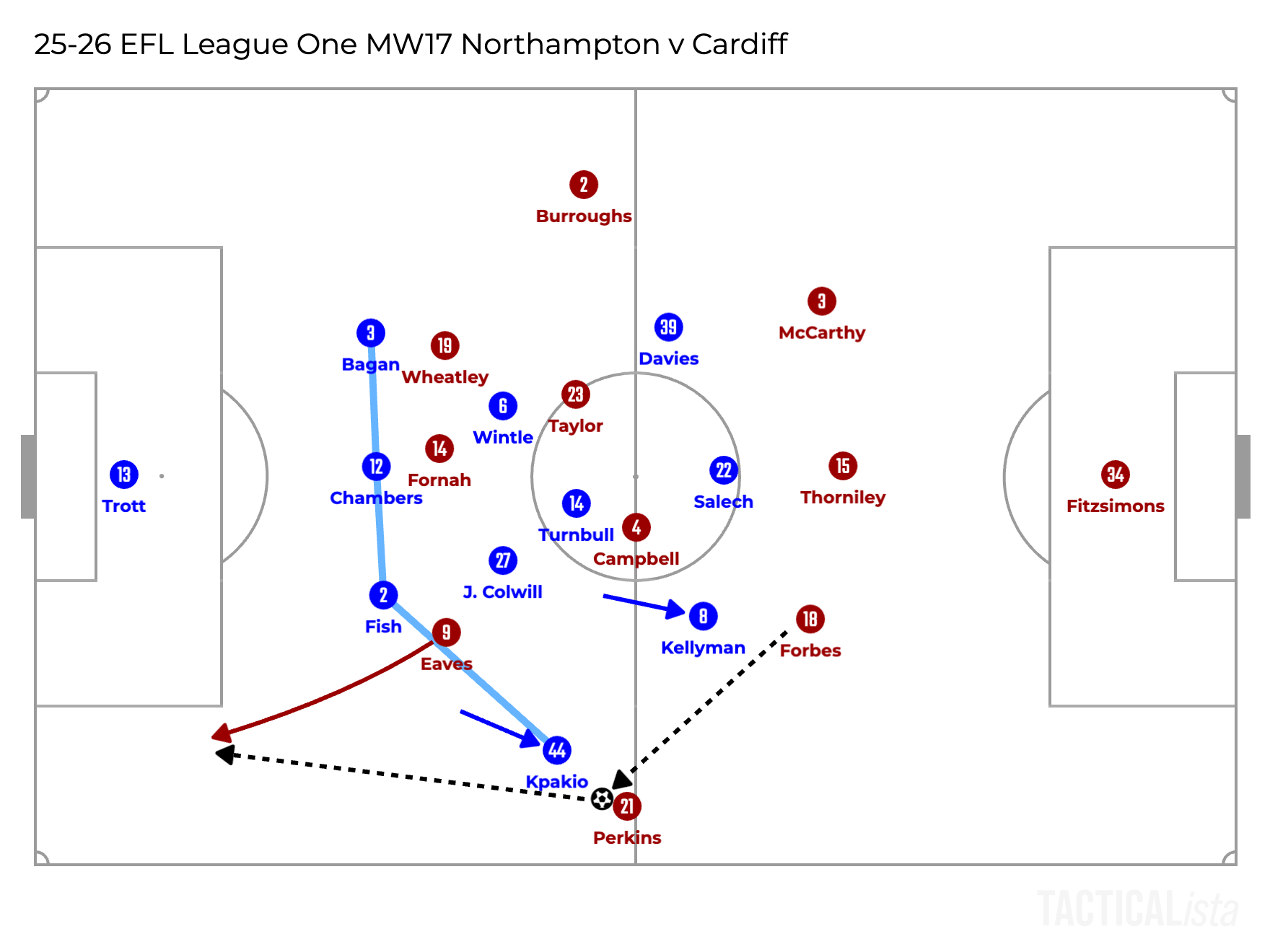
Against them, the fullbacks are required to cover longer distances to apply pressure on the opposition wingbacks on the ball. If they delay, the wingbacks can receive the ball and face forward comfortably and they can play through in behind, and Cardiff’s centre backs will be dragged away from the middle.
Another concern is the individual defensive abilities. At this level, it is impossible to have players who can attack well and defend well. If they can do that, they would be playing in the Championship or Premier League. They are extremely well on the ball, but defensively very vulnerable. The defenders have often struggled against strong strikers and let them create time by holding up, losing the duels or been outran by them in transitions.
If the game becomes faster with a lot of transitions, they will struggle. Therefore, they have to be extreme and stick to their ideas. Their short-term goal is obviously the promotion back to the Championship, but with this clear game model and promising young players, they can build something that goes beyond immediate results.